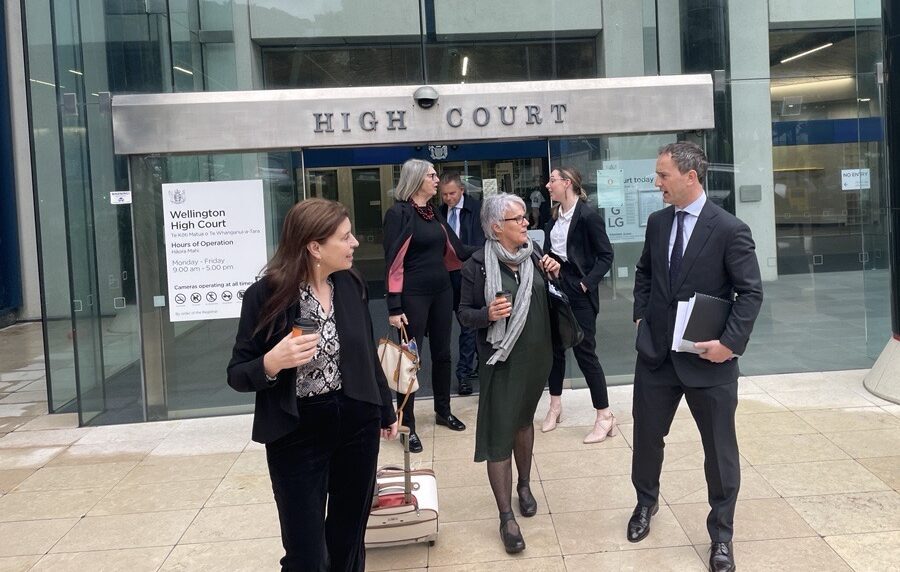
Today the High Court released its judgment in a class action brought by the New Zealand College of Midwives on behalf of Lead Maternity Carer (LMC) midwives against the Crown. A copy of the judgment, together with background information and a media statement, is available on this webpage.
This is a landmark decision for midwifery and for Aotearoa New Zealand’s maternity system. The Court found that the Crown breached a formal settlement agreement it entered into with the College in 2018. In particular, the Court held that the Crown failed to work with the College in good faith, failed to take the necessary steps to implement a national midwifery agreement, and failed to ensure that LMC midwives were able to receive fair and reasonable payment for their work.
The Court also found that the Crown’s long‑standing treatment of LMC midwives under the Primary Maternity Services Notices amounted to unlawful sex‑based discrimination, in breach of the New Zealand Bill of Rights Act 1990. The judgment recognised that, since at least 2007, midwives have been paid under a system that does not give them the same rights as other self‑employed health professionals to negotiate conditions or achieve fair remuneration.
As part of its analysis, the Court compared the position of LMC midwives with other health professionals, such as general practitioners funded under Primary Health Organisation (PHO) Services Agreements, who have enforceable negotiation rights and structured pathways to fair pay. The Court noted that these protections do not exist for LMC midwives under the maternity funding notices, despite midwifery being a profession made up overwhelmingly of women providing care to women in relation to women’s health. The Court made clear that these differences were not simply the result of policy choices, but breaches of legal and constitutional obligations.
The College acknowledges and honours the many midwives, leaders, advisors, and supporters who have contributed to this case over many years. Bringing legal proceedings was not undertaken lightly. It became necessary only after repeated efforts to resolve these issues through policy, negotiation, and advocacy failed to deliver change, accountability, or fairness. While the case concerned remuneration and conditions, it has always been about more than pay alone. At its heart, it is about the recognition, dignity, and sustainability of the midwifery profession, and about protecting access to safe, high‑quality, midwife‑led continuity of care for mothers, babies, and whānau across Aotearoa.
The College will now take time to carefully consider the judgment and its implications, including the appropriate next steps. The College remains committed to acting with integrity and care, and to working towards meaningful and lasting change for midwives and for the maternity system as a whole.
Media enquiries should be directed to the College’s media liaison:
Sarah Munnik
📧 sarah.munnik@pead.co.nz
📞 022 682 8090